desk - digital education made easy
2023
Education
HfG Bachelor Thesis
Despite ongoing digitalization in schools, teaching is still largely dominated by traditional analogue media. While these methods are well established, they often fail to leverage the full potential of digital tools to enhance understanding, engagement, and flexibility in the classroom.
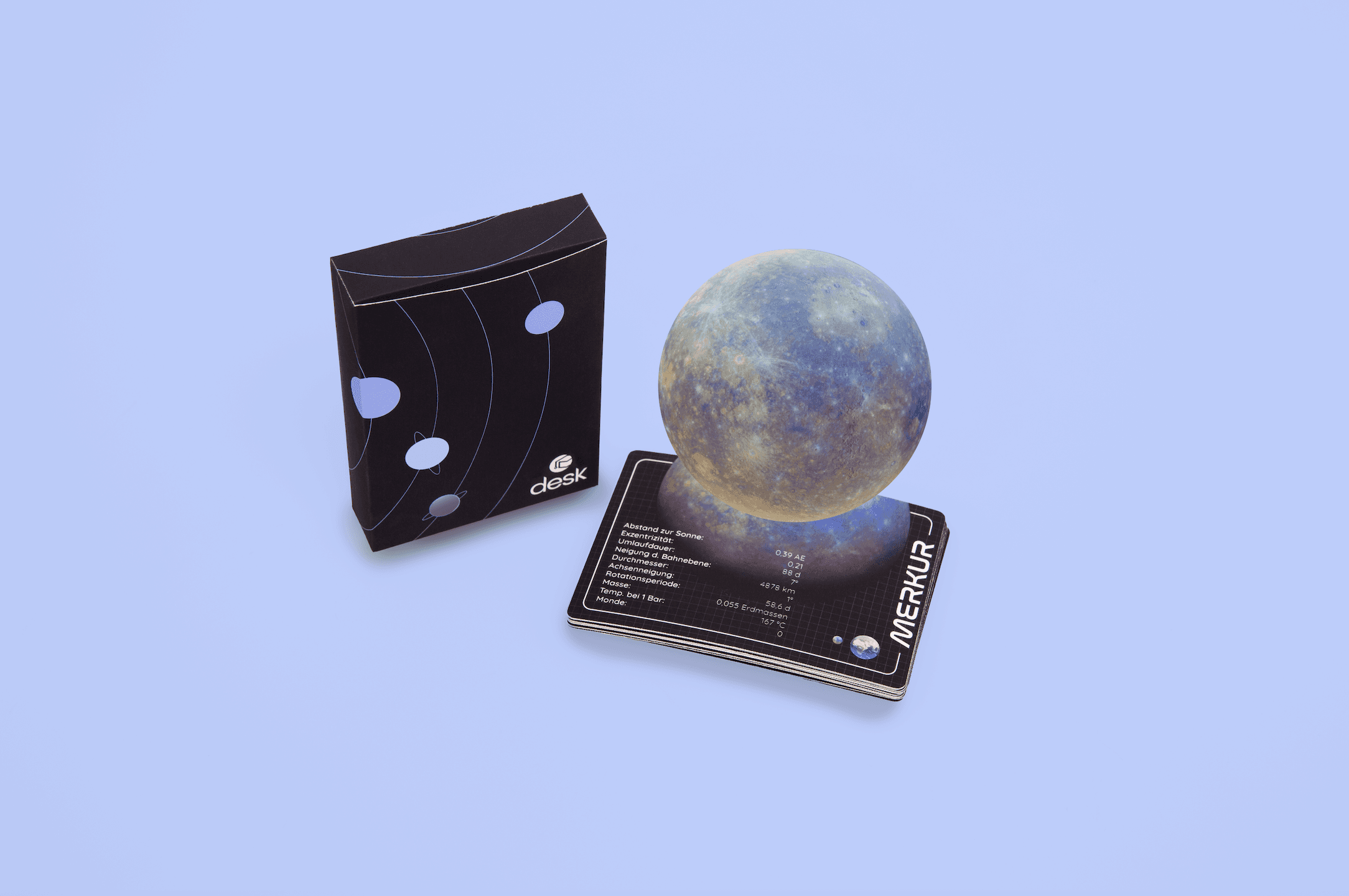
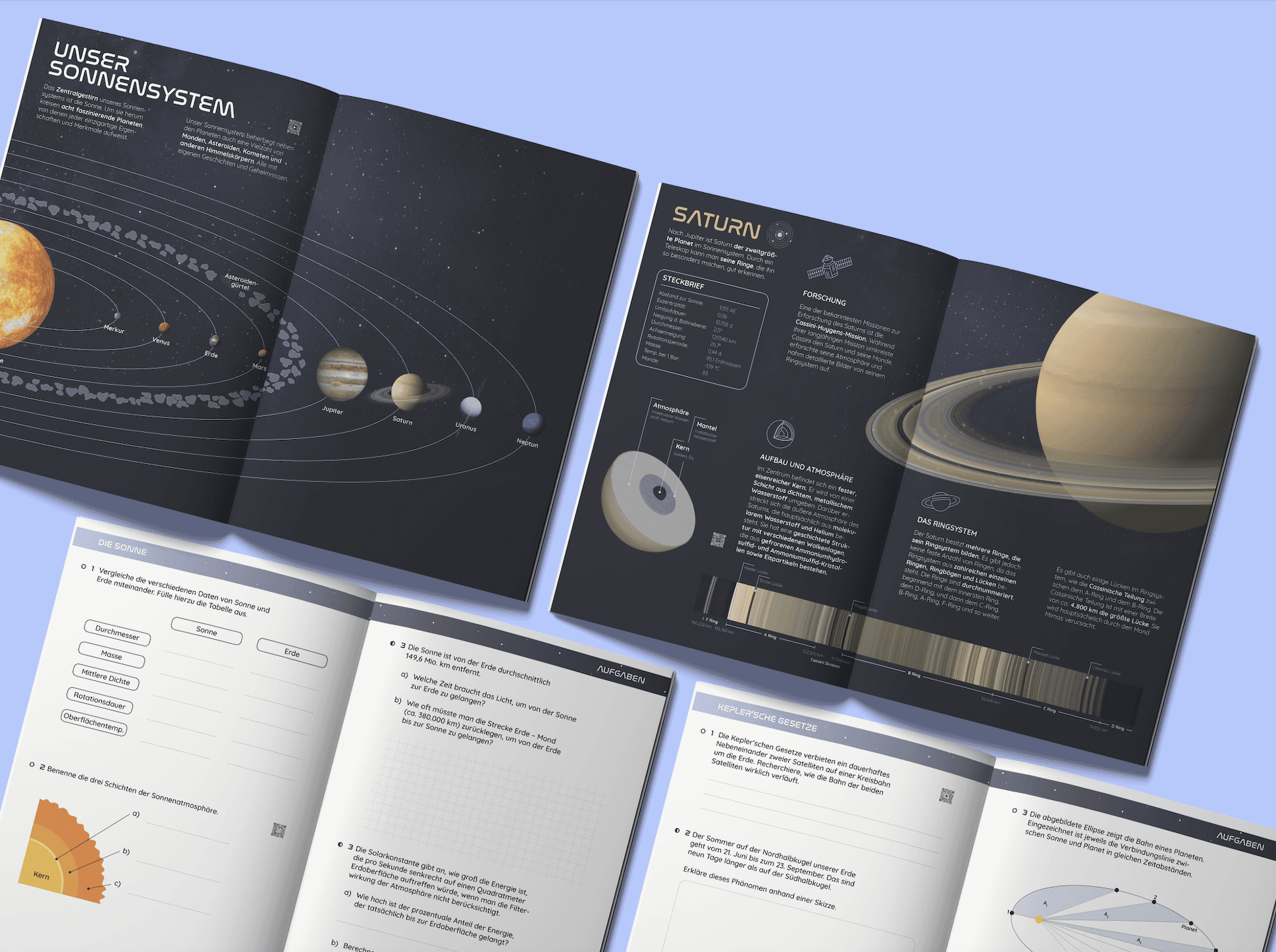
As part of my bachelor’s thesis, I collaborated with two fellow students to explore what contemporary, hybrid teaching could look like. Our objective was to demonstrate the possibilities of digital media in education and to convince teachers of their added value through thoughtfully designed, practical examples. We developed a range of teaching materials that are either fully digital or enriched with meaningful digital components.
The resulting concept is transferable to nearly all school subjects. For this project, we chose the elective subject of astronomy as an exemplary use case. Astronomy is primarily taught at upper secondary level and offers ideal conditions for visual, interactive, and exploratory learning experiences.
Research — Observing the Reality of Teaching
Every project I work on begins with understanding before solution-making. In this case, we started by examining the current state of teaching practice in schools, with a particular focus on science education.
We conducted in-depth research into curricula, existing teaching materials, and the structure of classroom instruction. To complement this, we interviewed physics teachers and university lecturers to gain insights into everyday teaching realities. These conversations revealed recurring challenges: limited preparation time, abstract subject matter that is difficult to visualize, and a lack of flexible, engaging teaching tools that integrate smoothly into existing lessons.
By combining qualitative interviews with desk research, we identified patterns in needs and frustrations across stakeholders. This phase helped us challenge assumptions and define the core problem: digital tools are often either too complex, too rigid, or insufficiently aligned with real classroom workflows.
Strategy — Defining a Hybrid Teaching System
Based on our research insights, we translated findings into a clear experience strategy. Our goal was not to replace analogue teaching, but to design a hybrid system where digital and physical media complement each other.
Using Design Thinking and user-centered methods, we defined two primary user groups—teachers and students—and mapped their journeys, needs, and constraints. Flexibility emerged as a key strategic principle: teachers needed modular content that could be easily adapted to different lesson plans, while students required varied formats to support different learning styles.
This led to a clear strategic direction: a modular teaching ecosystem that allows educators to curate content, manage lessons digitally, and enrich analogue materials through interactive technologies such as AR and AI. At this stage, priorities were set, concepts were evaluated for feasibility, and success criteria were defined in terms of usability, motivation, and educational value.
Design — Bringing Learning Experiences to Life
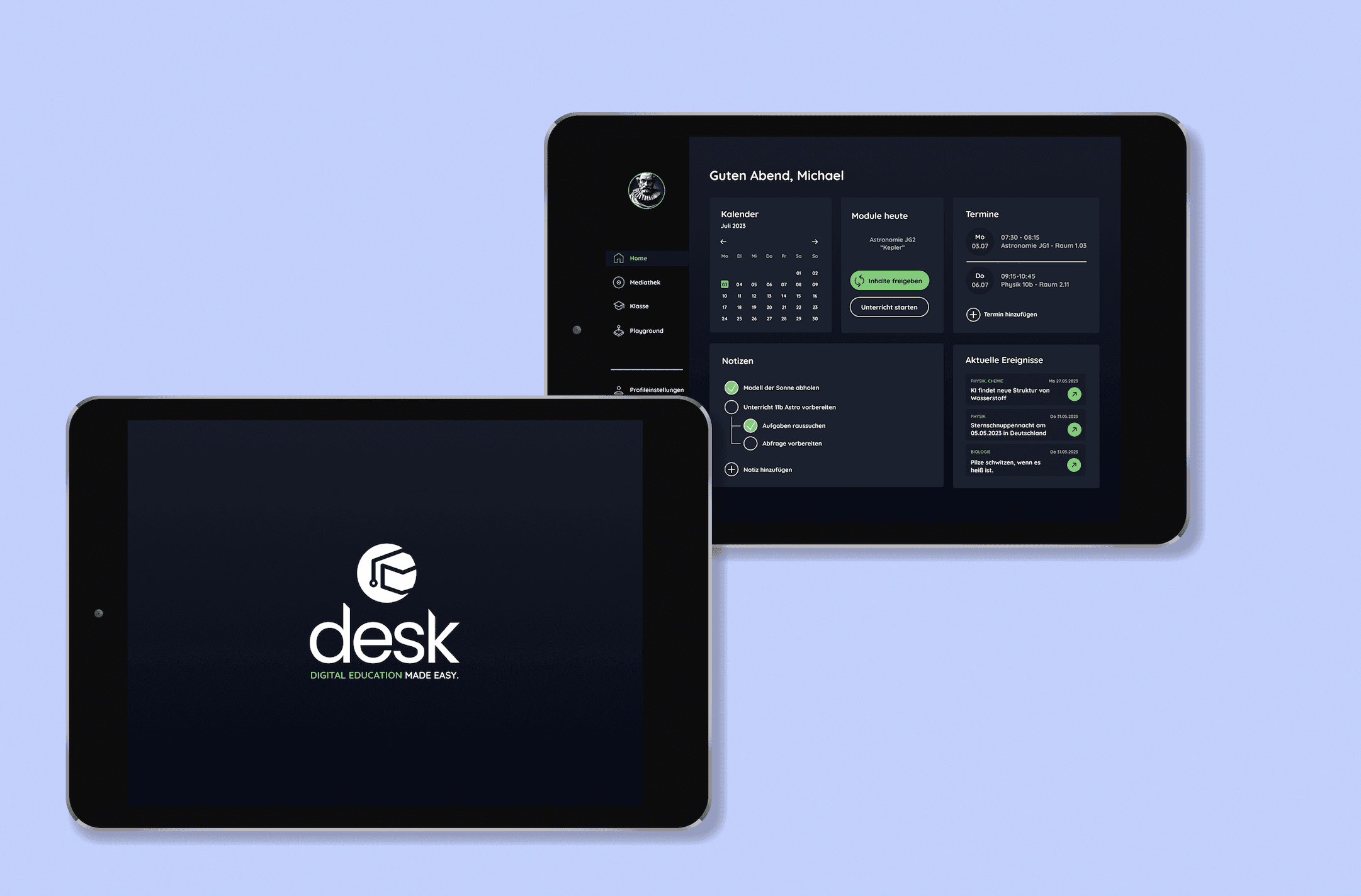
With a defined strategy, the concept was translated into concrete learning experiences. At the center of the system is a modular app designed as a digital teaching and learning environment tailored to the needs of both teachers and students.
The App as a Learning Platform
The app provides a wide range of teaching and learning content, including explanatory videos, concise summaries, and exercises with varying difficulty levels. Teachers can use these materials to structure their lessons and create custom modules by selecting relevant content. These modules are then shared with students via a digital classroom, which serves as the interface between teachers and learners and allows lessons to be initiated and guided digitally.
Versatile Teaching Content
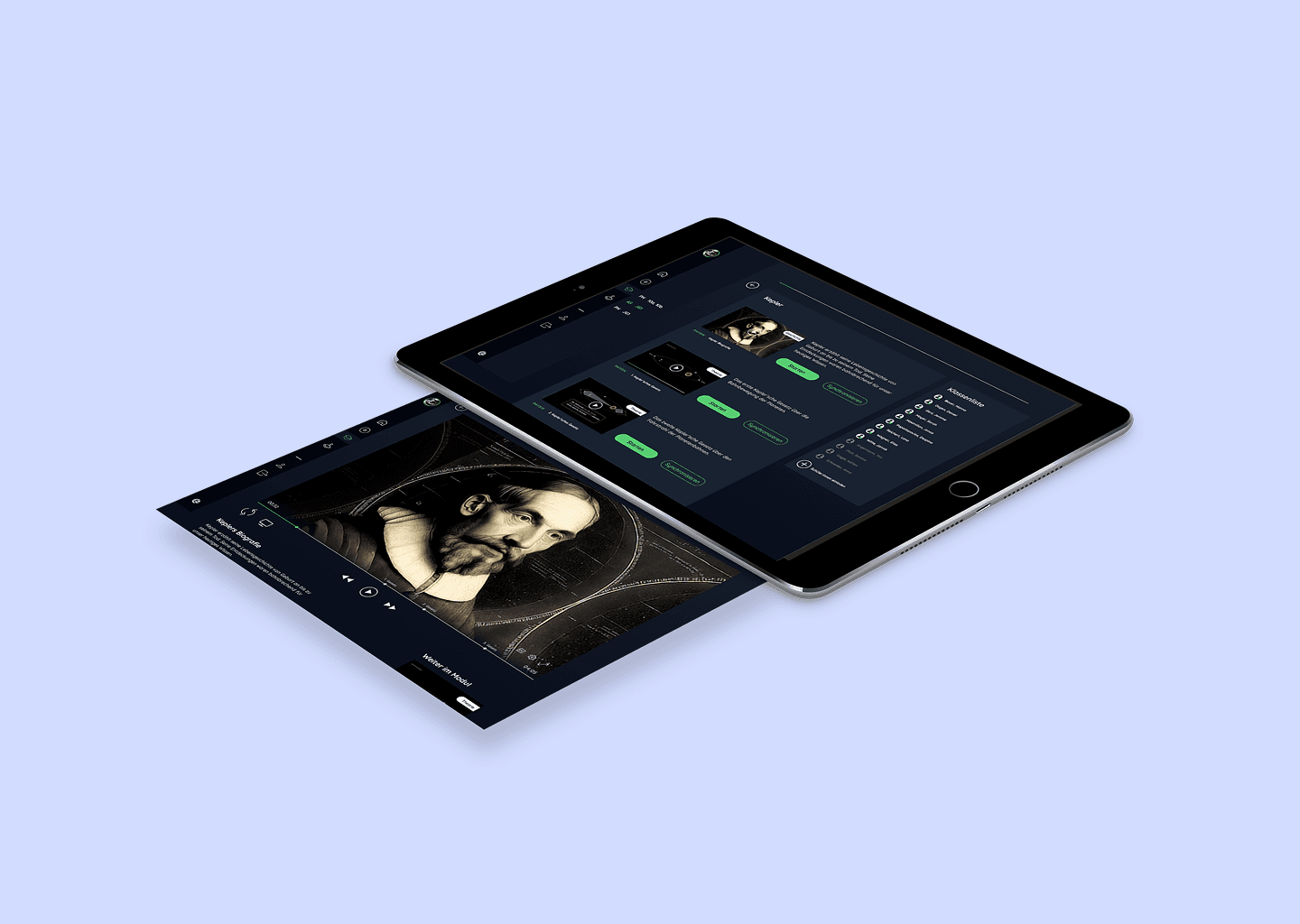
Video-based content plays a central role in the app. It ranges from narrated explainer videos to short interactive animations that teachers can use to support their own explanations. A distinctive feature of the platform is the use of AI-supported portraits of historical figures. Scientists such as Johannes Kepler are brought to life, telling their own stories and explaining their contributions to astronomy from a first-person perspective.
Practice and Assessment
To support independent learning, the app includes a variety of exercises for each topic area, available in multiple difficulty levels. These tasks can be used either for practice or within a simulated exam mode that allows students to assess their own knowledge and learning progress.